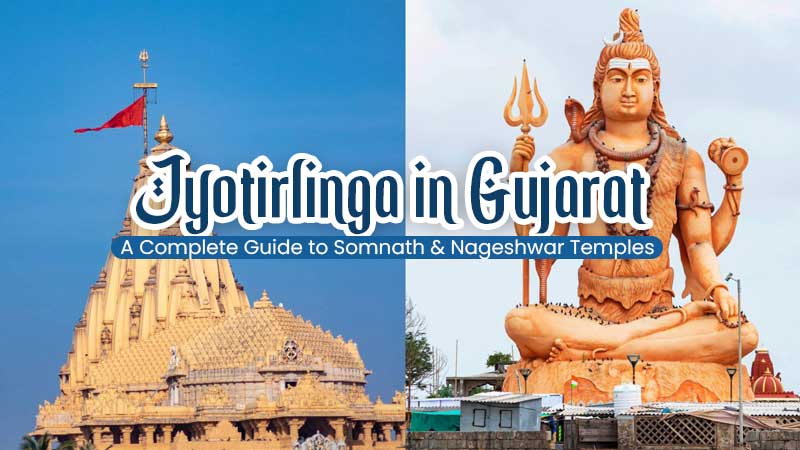
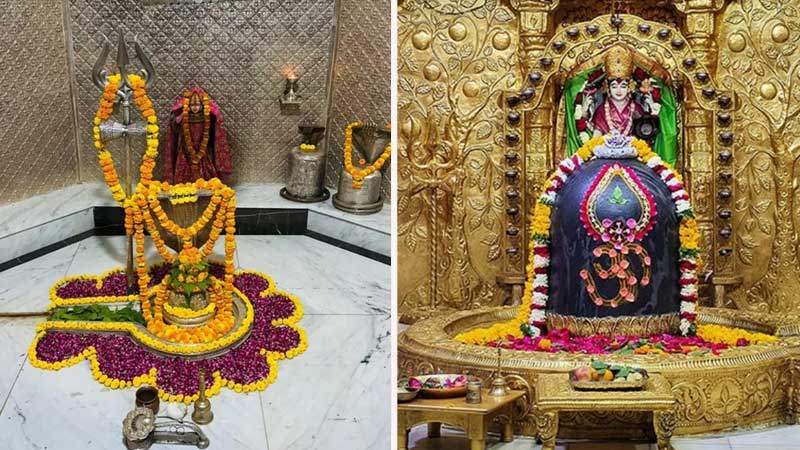
The auspicious land of spirituality and devotion, Gujarat, comprises two of the 12 Jyotirlinga. A Jyotirlinga is referred to as the “pillar of light,” which was created by Lord Shiva. Shri Somnath & Shri Nageshwar temples are the two Jyotirlinga in Gujarat. Many other popular temples are in Gujarat, like the Sun Temple Modhera, Khodaldham Kagvad, etc.
Gujarat is considered a land of God, as it is home to many spiritual sites. Gujarat holds prominent significance in Hindu mythology because it is home to many spiritual sites, such as the Dwarkadhish temple, one of the Chardham, known as the kingdom of Shri Krishna is located in the city. It also comprises the Ambaji temple, one of 51 Shakti peethas, and is also the main center of Jainism.
These two Jyotirlinga don’t only have spiritual significance but also has historical, geographical, and architectural importance. This article will get you along about the Jyotirlinga in Gujarat. Both the temple draws 1000s of devotees every year to seek blessings from Lord Shiva.
Table of Contents
About the Jyotirlinga Somnath temple:
The first Adi Jyotirlinga, the Somnath temple, is defined as Soma (Moon) and Nath (Lord). The temple lies at the meeting of the Kapila, Hiran, and Sarasvati rivers, and the waves of the Arabian Sea touch the shore on which it is constructed.
According to Hindu mythological fact, the temple was built by Soma, the god of the moon, originally with gold, which was later rebuilt by Ravana in silver, by Krishna in wood, and by Bhimdev in stone. Moon God (Chandra) made the offering of worship to Lord Shiva here in order to get rid of the curse laid by Daksha Prajapati. Lord Shiva accepted his prayers and returned the moon’s radiance but also blessed the place as a Jyotirlinga.
History of Somnath Temple
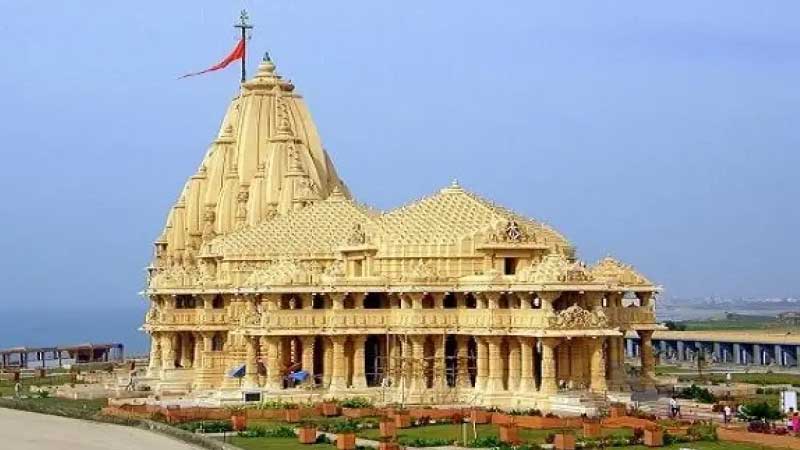
The scared Somnath temple has faced numerous invasions and destruction over the years but was rebuilt each time. The first time it was invaded by the Muhammad of Ghazani. Muslim invaders between the 11th and 18th centuries has invaded this temple many times. Today, the temple stands as a symbol of devotion and a definition of architectural beauty. The temple, which is standing today is reconstructed by Sardar Vallabhbhai Patel in the Chalukya style, features a towering shikhara and beautifully carved stonework and inaugurated by the first President of India, Dr. Rajendra Prasad.
Shree Somnath Jyotirlinga Timings:
- Temple opening: 6:00 AM
- Darshan: 6:00 AM – 10:00 PM
- Aarti: 7:00 AM, 12:00 PM, and 7:00 PM
- Sound and Light Show: 8:00 PM – 9:00 PM (may be suspended in monsoon).
- Temple closing: 10:00 AM.
How to reach the Shri Somnath temple
It is very convenient to reach this Jyotirlinga in Gujarat, as there are always ways to commute here.
- By Air: Porbandar Airport is 120 km away, and Rajkot Airport is 200 km away.
- By train: the nearest railway station is Somnath, which is connected to many cities easily.
- By road: The temple is easily accessible by road; Ahmedabad is around 410 km.
Best time to visit
The best time to visit Somnath Jyotirlinga is from October to March, when the weather is pleasant and calm, which makes the darshan most appropriate during these months.
Festivals like Mahashivratri and Kartik Purnima attract the largest number of footfalls in the temple.
Nearby attractions of the Somnath temple
- Dwarkadhish Temple: The most spiritual temple of Shri Krishna, one of the Char Dham, is located around 240 km away. There are many stories related to this temple.
- Laxmi Narayan Temple: A beautiful temple made with architectural design and carvings. The temple is a replica of the Laxmi Narayan temple in Badrinath.
- Shree Parshuram Temple: The temple is made in the same place where Parshuram meditated for killing Kshatriyas.
- Sana Buddhist Caves: A complex chain of 62 caves, that made had built for their shelter, depicting the Buddhist influence in ancient times.
- SasanGir: A national park and wildlife sanctuary that has a wide variety of flora and fauna, which you can witness through a jungle safari.
Interesting facts about Somnath Jyotirling
- The Shivalinga present in the temple has been kept hidden in Syamantak Mani, which is associated with Lord Krishna.
- Somnath Jyotirling has been mentioned in many ancient Hindu texts like the Shreemad Bhagavat, Skanda Purana, Shiva Purana, and the Rig Veda, signifying its importance as one of the most devotion pilgrimage sites in India.
- Somnath is the confluence point of three rivers, Kapila, Hiran, and Saraswati, which is known as Triveni Sangam.
- With Lord Shiva, there are also the sculptures of Lord Brahma and Lord Vishnu.
- The temple is believed to be situated at a location where there is no landmass in a straight line between the Somnath seashore and Antarctica.
- According to the SkandaPurana, the name of the temple changes every time the world is reconstructed by Brahma after the destruction. Yet the next name of the Somnath temple will be the PremNath temple.
Nageshwar temple
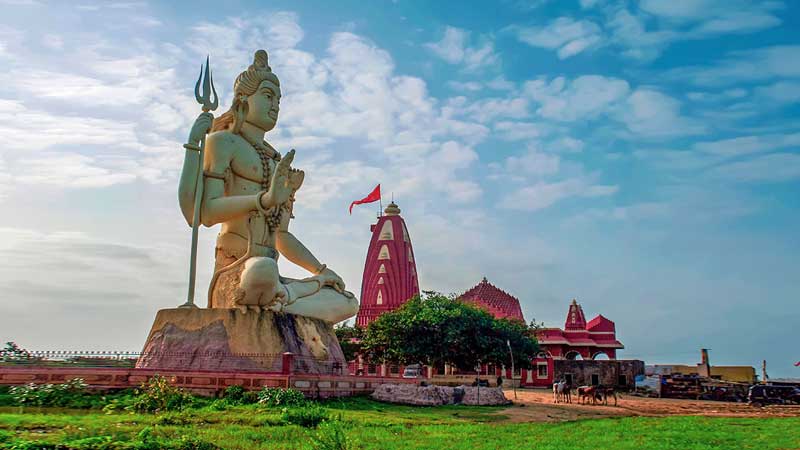
The name “Nageshwar” reflects the image of the serpent god. The temple is situated in Daarukavanam between Gomti and Dwarka on the coast of Saurashtra in Dwarka. It is one of the self-manifested (Swayambhu) Jyotirlinga. The temple is famous for an 80-foot-tall statue of Lord Shiva in a meditative posture. The temple holds peace and energy with its rich history and archeology that make it more spiritual.
History of Nageshwar Temple
According to legends, there was a demon called Daruk, who lived with his wife Daruka in the forest. The tale begins when a devotee named Supriya (a Shiva devotee) refused to teach the correct way of praying to Lord Shiva. The demon put Supriya in imprisonment and tortured him, but his continuous prayers and chanting of “Om namah Shivaya” impressed Lord Shiva, who arrived there and vanquished the demon. The place where the demon was killed is called Daarukavanam.
Shree Nageshwar Jyotirlinga timings:
- Morning Darshan & Abhisheka: 6:00 AM – 12:30 PM
- Morning Aarti: 5:30 AM – 6:00 AM
- Afternoon Break (Closed): 12:30 PM – 5:00 PM
- Evening Darshan: 5:00 PM – 9:30 PM
- Evening Aarti: 7:00 PM – 8:30 PM
How to reach Nageshwar temple
- By Air: The nearest airports are Porbandar (107 km) and Jamnagar (126–137 km).
- By Train: Dwarka Railway Station is the nearest to the Nageshwar temple. From Dwarka, you can take a taxi or local transport to Nageshwar (approx. 30-45 minutes).
- By Road: Nageshwar is well-connected to cities. Once you reach Dwarka, the temple is around 17-18 km away. a taxi, private car, or local transport is the best option to rely on.
Best time to visit
October-March offers the most pleasant weather, cool mornings, and clear skies, suitable for temple visits and sightseeing.
Shravan month (around July-August) and Mahashivratri are the most spiritual times to visit, but due to the large crowd, people often avoid these seasons.
Nearby attractions of Nageshwar temple
- Swaminarayan temple: The temple is made up of limestone and is famous for its modern architecture and is associated with Lord Krishna.
- Bet Dwarka, Shankhodhar Island: Considered the original home to Lord Krishna during his ruling period. Located on the northern tip of the Gulf of Kutch.
- Gopi Talav: A place considered holy by Hindus, where it is believed that the Gopis came to see Lord Krishna after he moved to Dwarka.
- Shivrajpur Beach: A must-visit destination in Dwarka with a beautiful shoreline, white-sand beaches, and a calm environment.
- Bhadkeshwar Mahadev temple: A Hindu temple dedicated to Lord Shiva situated at the confluence of the Gomti River and the Arabian Sea.
- Sudama Setu: Located on the banks of the Gomti River and connecting the main temple town to the Panchkui Island.
Interesting facts about Nageshwar temple
- Nageshwar Temple is the 10th among the most sacred shrines of Lord Shiva.
- The temple has a unique two-foot underground chamber.
- The Shiva linga is carved from the Dwarkashila stone and has small chakras taking the shape of Tri-mukhi Rudraksha.
- It is believed that Lord Krishna himself prayed and performed Rudrabhishek here.
- Worshipping in Nageshwar Jyotirling can remove all kaalsarp and grant freedom from all negative fear and poison, both physically and mentally.
- The linga present in Nageshwar Jyotirling is south-facing.
Distance between Somnath temple and Nageshwar temple
The spiritual journey towards Somnath and Nageshwar temples can be covered together, as the distance from Somnath to Nageshwar Jyotirlinga is approximately 215 kilometers by road. The Somnath Jyotirlinga Tour takes around 4.5 to 5 hours, depending on your mode of travel and route preference.
- By Car/Taxi: 4.5 to 5 hours (most comfortable) while watching the scenic view of the Arabian Sea.
- By Train: Nearest railway stations are Veraval (for Somnath) and Dwarka (for Nageshwar). Trains between these stations take about 5 to 6 hours. Even after that, you have to take a car or taxi to reach the temple.
- By Bus: Traveling by bus is the most affordable option, as buses are easily available at regular intervals.
Travel tips
- It is advisable to dress modestly at religious places, covering your shoulders and knees, as a sign of respect.
- Always wear the most comfortable pair of shoes that can be easily removed, as you have, as there is a good amount of walking around the temple.
- It is highly recommended to book your hotels and travel arrangements well in advance to avoid the last-minute chaos.
- Some areas may prohibit photography, so be aware of the rules made by the temple authorities.
- Do not do anything that is offensive, and be respectful to locals by following their etiquette.
- Enjoy the local food of Gujarat and taste the flavours of a special Gujarati thali.
- Always carry any necessary medications, a power bank for your devices, and a small first-aid kit.
- Be open to minor adjustments to your itinerary. Unexpected delays can occur, especially during peak seasons. So, it is recommended to keep a buffer day with you.
- Pre-book an India Pilgrimage Tour Package to avoid the hassle of planning a trip, hotel bookings, making an itinerary, and other arrangements.
Conclusion
The Jyotirlinga in Gujarat, Shree Somnath temple, and Shri Nageshwar temple are dedicated to Lord Shiva. Both Jyotirlinga has its own importance and hold mythological, architectural, and spiritual significance. Gujarat is a state full of spiritual sites like Dwarkadhish temple, Bhadkeshwar Mahadev temple, Swaminarayan temple, and many more. Not only is the place spiritually connected to nature, like the confluence of three rivers, Sasan Gir National Park. Your journey toward Jyotirlinga will take you closer to spirituality as well as nature. And will remove the negativity from your mind.
FAQs About Somnath and Nageshwar Jyotirlinga in Gujarat
There are two Jyotirlinga in Gujarat: Somnath Temple and Nageshwar Temple.
Yes, Somnath and Nageshwar temples are part of the 12 Jyotirlinga.
Nearby attractions of Nageshwar temple are Dwarkadhish Temple, Rukmini Devi Temple, Beyt Dwarka, and Shivrajpur Beach.
The total distance between Somnath and Nageshwar temple is 215 kilometers by road.
The best way to reach Somnath temple from Delhi is by train, and the nearest railway station is Somnath Railway Station, which is 1.5 km away from the temple.
The best time to visit Somnath and Nageshwar temples is from October to March.